Games I Played in 2025 - Spirit Hunter: Death Mark
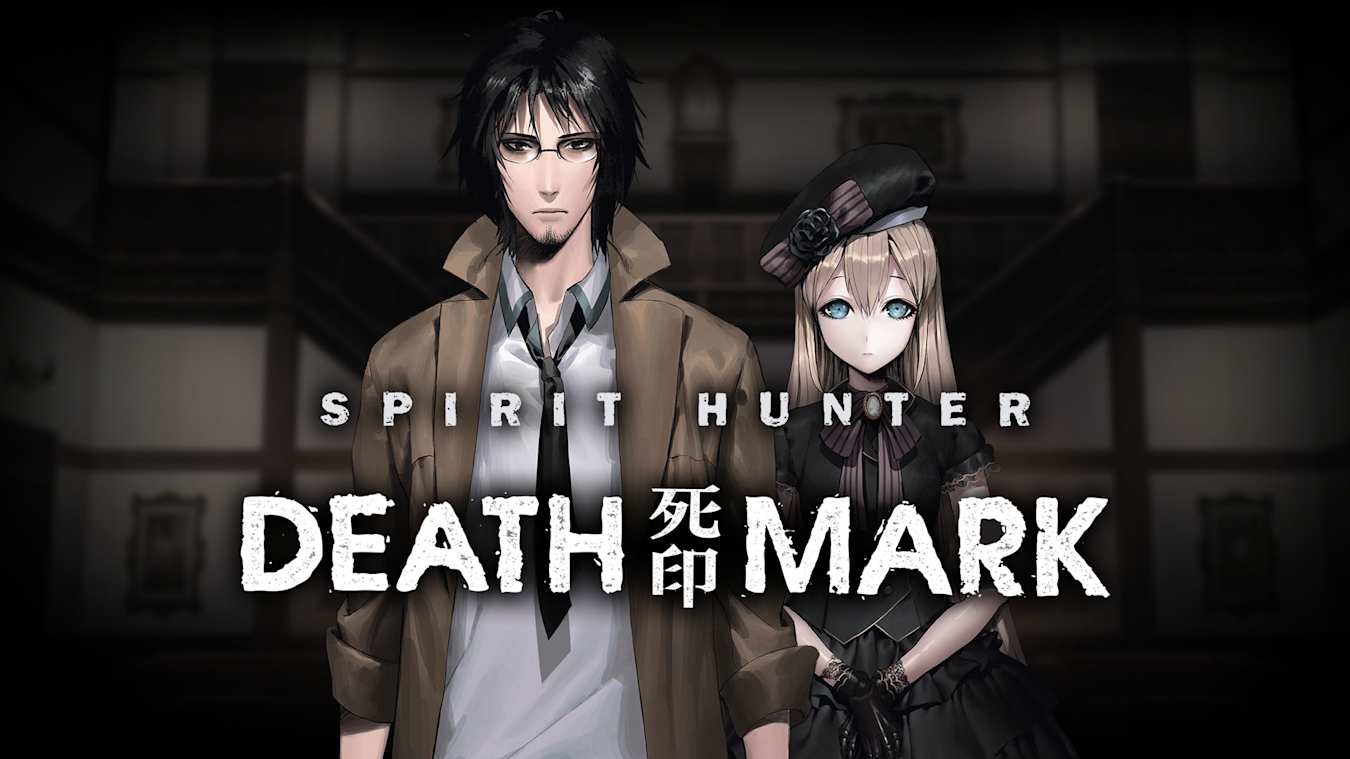
Console: PSVita, PS4, Switch, PC, XB1
Developer: Experience
Release Date: October 31st 2018
Spirit Hunter: Death Mark is a horror visual novel and adventure game with a focus on life and death choices, puzzle-solving, and ghost hunting. The first in the Spirit Hunter series, Death Mark is a game I've long been curious about and I'm glad to have played. I didn't even know the premise of the game outside of the fact it's a sort of ghost hunting detective game, and obviously since it's so narratively driven, I won't spoil anything important. Death Mark itself is a fairly interesting game in terms of its release, since the Switch version includes Chapter 6, which used to be DLC on other platforms, and also is the only version where the DLC Chapter 7 is available... which was released in April this year. It's a very strange thing to see, but I thankfully have the Switch version, so I had access to this DLC chapter.

Death Mark's premise is almost immediately intriguing: after hearing a ghost story from two girls walking by, the main character suddenly finds himself at the Kujou family mansion with no memories of how he got there and with an odd mark on his wrist. The Kujous are spirit healers, and after finding the body of Saya Kujou, who he was seemingly coming to visit judging by the business card he was holding, learns of his predicament from the family's talking doll named Mary. The mark on his wrist is a Death Mark given to him by a spirit, and it indicates that he will soon die as his memories erode away, including his name (his new name is chosen by the player, but is Kazuo Yashiki by default). The only way to save himself is to find the spirit that gave him the mark and solve its grudge.
Just then, two people knock at the mansion's front doors: they also have Death Marks and are seeking aid to get rid of it. Naturally, since the game has more than one Chapter, then it's pretty obvious that the source of Yashiki's mark stays a mystery until the end of the base game, but something I quite like about Death Mark is its rotating cast of characters: characters don't stick around through every Chapter, and instead stay for theirs and maybe one more, then leave so other characters can be introduced. It makes every Chapter feel different, though the two extra Chapters instead feature all the existing characters in different combinations, to the point that Chapter 7 doesn't even have you play as Yashiki.
The quality of the cast is a bit shaky, though. Somehow, they're both realistically flawed and annoyingly stereotypical. From a genius child, occult-obsessed airheaded schoolgirl and a delinquent with a heart of gold to a cheerful idol, an ugly fat otaku and a crazy old homeless man, there's something a little strange about the characters. There's some standouts and some weaker characters, as is to be expected, but it's still an intriguing group of weirdos that are generally well-written, as is Yashiki. Yashiki in particular is pretty surprisingly introverted and awkward, which I haven't seen many times for a visual novel protagonist, so you get a lot of thoughts he doesn't say out loud, moreso than I've seen normally.

The quality of the story is very strong in my opinion, with each Chapter building up the game's world and each one connects in a satisfactory way, with Chapter 5 concluding the game on a big high. Each Chapter is also self-contained to an extent thanks to the spirit being hunted and the characters being helped changing. Each spirit is interesting to figure out, and equal parts sad and disturbing, as it should be. Being an Asian horror game, the story also doesn't pull its punches with the disturbing content, which I love.
However, the quality of the writing itself is quite poor due to the lackluster localization. While sometimes the writing is a little stiff, that's nothing compared to the amount of typos and mistakes throughout the entire script, with each Chapter easily having a dozen of them if not multiple dozens. Whether it's switched letters ("completley"), physical errors ("of" instead of "if"), grammar mistakes (using the wrong they're/their or your/you're), extra words ("Was that S-ko? If it so, then...), spelling mistakes ("monsterous" and not "monstrous"), extra letters ("realeased", or "and" instead of "an"), an uncapitalized "I," or even a nonsensical sentence seemingly borne from autocorrect ("If we just had something kind of clue..."), it all makes the game feel truly amateur which is a massive shame. Plus, it's quite clear that when text describes what a partner character is doing, the script defaults to "they/them" instead of the appropriate pronoun since the game likely didn't have a way to differentiate whether you have a male or female character accompanying to, which feels jarring. Thankfully, the DLC Chapter that was added this year has none of these typo issues.
I'm also not a big fan of the stylistic choice of having location names be abbreviated, with (possibly) Tokyo for example being called T City instead. There's also unimportant background characters that get their names truncated, with characters called "Mr. N-mura," "S-ko," and "A-ko." I found it makes things feel more confusing than necessary. I'm equally not a big fan of having spirits sometimes talk in alternating upper and lowercase letters, it came across as an almost childish way to try and scare the player, like it was a creepypasta. There's also small issues with legibility in a few ways. First, the text is either a pale beige or a washed-out cyan, with the latter being for Yashiki's thoughts and dialogue as well as overall descriptions, or a bright magenta for spirits' dialogue. Sometimes I found it strangely difficult to differentiate the first two outside of the game's log feature for some reason, and at times it felt like the colors were wrong. Second, there is no indication as to which character is speaking outside of Yashiki's text being a different color, which not only can lead to confusion in the moment when multiple characters are present, but also makes the log more troublesome to look through. Finally, perhaps most annoyingly, there is no way to skip the text scroll outside of outright fast-forwarding through dialogue. This means that faster readers (like me) will find it bothersome to read at forced slower speeds. Chapter 7 is even more egregious with this, having tons of extremely slow text scrolling that felt genuinely painful to sit through. If there was a fast-forward option that doesn't skip through textboxes or a simple 'push to skip' option like there is in most games, this wouldn't be an issue. Even more maddeningly, the latter is present in the game, but only during car scenes between chapter sections. Finally, two buttons are never shown on the UI despite being useful, that being L to fast-forward and X to hide text and see the art fully.

The game's art is gorgeous, handled by Rui Tomono and Fumiya Sumio, with immersive, detailed backgrounds. Cleverly, Death Mark's main environments are all locations where repeating areas (similar rooms, hallways, etc.) are plausible, so it seems like this allowed the artists to put in a lot of detail everywhere. The game also features multiple full-screen "horror" images where you often see something scary or disturbing. These are fantastic and in even higher quality than the rest of the game, but there's something that stood out to me. Throughout the game, you find multiple of the spirits' victims' corpses, as you'd likely expect. However, immediately from Chapter 1, you can see that whenever there's a female victim, they're shown either naked, in underwear, or being undressed, often (but not always) in poses that could pass as sexy with either their crotch or their chest as the main focus. Male victims, on the other hand, are often shown with close-ups from the shoulder up, and almost always fully clothed. This isn't really the kind of thing that bothers me usually, but in this case it feels gross, and not in a way that enhances the horror in any way. It's especially out of place since all of the spirits have no real reason to do that only to women, not to mention that the spirit in Chapter 1 is an 8 year old child. It's shoe-horned in and doesn't suit the game's general atmosphere, especially with the first one being essentially a woman being raped by thorny vines.

Thankfully, these happen only once per chapter, if that, and otherwise the art is incredible to look at as you explore the game's spooky areas. The game's exploration is pretty basic and handled in first person, with the left stick allowing you to investigate with the flashlight and either the dpad or the right stick letting you move to a new room in any of the four directions. In that way, it's a little reminiscent of a dungeon crawler, though there is a quick transition after every movement to load the new room. There's some unwelcome friction with such a simple system, though: the player rotates depending on the direction they come from. For example, in a plus-shaped 5 room setup, going from the south room to the center room and then the western room, you would press up, and then left. To get to the western room from the north room, you'd have to press down, then right since the left room is to your right as you're facing south. It's a kind of needless mechanic that only brings confusion, especially since there's never something only visible from a certain direction. At least the minimap shows you the direction you're facing, but I very often went the wrong way when not facing north. At first I was also a bit concerned about the exploration, since objects you can inspect have a yellow dot flashing when highlighted and I thought it'd get lost in the visuals sometimes, but that basically never happens. What does happen is that, a few times, there's a disconnect between the game's art and what's happening, most strikingly in Chapters 1 and 4 where there are doors with broken windows that are locked, but require a key instead of Yashiki just reaching through the broken window to unlock it.
There's a fair amount of jumpscares in the game too, some are fullscreen flashes of a ghost's face and are intended for a story beat, while others are more subtle, showing a ghost as you highlight an area with your flashlight for a few seconds before they vanish with a ghastly moan. I did notice that the amount of jumpscares went down the further in the game I got, but Chapter 5 in particular has such an oppressive atmosphere that I can understand. Outside of the main spirits, though, it's all nondescript ghosts that don't serve a big purpose. There's also some audio jumpscares, with sudden barking, knocking or even chainsaw revving at odd times to keep you on edge. I wouldn't say any of them felt bad enough to be truly "cheap," but your mileage may vary. It's not constant enough to be an issue, I'd say.

The big feature of Death Mark is the Death Choice segments, where something happens and you're forced to take a 3-way multiple choice question on a timer, where only one option allows you to survive unscathed. The two possible punishments are losing an arbitrary amount of Soul Power or an instant game over. Soul Power is the game's one resource, starting at 1000 when beginning a Chapter and draining rapidly while a Death Choice is happening. Very often, there are multiple Death Choices in a row, so it can be quite tense. Luckily, by exploring, you can find worn-out talismans that refill your Soul Power. Unfortunately, these Death Choice segments are very hit or miss. While sometimes they're clever, they're often either extremely easy since the solution is spelled out beforehand, or they're unfairly difficult due to some obtuse reasons, such as requiring out-of-game knowledge (I hope you know your Greek alphabet!) or even needing you to have inspected something while accompanied by a specific character. Thankfully, a game over allows you to try it again, but that also kind of cheapens the thrill and stress of the situation. I don't think these Death Choices are particularly well-made, but since the punishment is mild, I don't really mind them.
Another big feature of Death Mark is the partner system; for every Chapter, you have to choose which Mark Bearer will accompany you. It often is just a cosmetic choice despite the characters all having stats that are never really explained or explicitly used; it changes some dialogue here and there, but since the writing is a bit stiff it can be hard to tell. This system would be fine if it weren't central to every Chapter: in each Chapter, you will need to have a particular partner at some point to progress, with every Chapter except 3 requiring you to have someone in particular or to NOT have a certain partner in order to defeat the spirit. The way you change partners is by returning to Kujou Mansion, meaning you need to backtrack all the way back to the area's entrance. It makes sense narratively, don't get me wrong, but it's a cumbersome thing to make the player do, and I think Experience realised it since both Chapter 6 and Chapter 7 change your partner as needed.

The spirit "combat" is the main place where the partners are used; every Chapter ends with a battle against the spirit where you must use the items you've gathered to defeat them. In these battles, you use both Yashiki and the chosen partner, and have them each choose an item to use, with combos being possible (such as dowsing a chemical on a ball and then throwing it). It's a little clunky, and some items are character-exclusive, which is why most Spirits require a specific character. Failure is an immediate game over, needing you to reload either the fight or to the moment before the fight so you can change partners or look up info.
It's not a time-sensitive thing, but if you don't really understand what you need to do, it can make the combat a chore as you trial-and-error your way through. Especially since, while it's not really spelled out in any way, each Chapter has a good and bad ending, with the difference being that your partner dies in the latter. These are a little odd despite being a cool idea, but frustratingly getting every good ending is necessary to unlock Chapter 6. The way you get the good ending is by defeating the spirit in a specific way, since there's two ways to defeat each one. Except for Chapter 3, where the choice of location at the end arbitrarily decides your partner's fate, for Chapter 6, where the answers you give during a prolonged Death Choice segment decides your partners' fate, and for Chapter 7, which relies on actions taken during the rest of the Chapter. I think overall, while having two ways to defeat the spirits is cool, I'd rather have something like in Chapter 7 where how you play affects it. I got bad endings on most of the Chapters without realising and had to speedrun the game all over again just to get the good endings this time.

PROS AND CONS
PROS
• Incredible art with fantastic atmosphere and tension.
• Generally good characters, including a good protagonist and some real standouts in Mashita, Moe and Daimon.
• Great, strong story overall that foreshadows things properly and even finds a reason to exist past Chapter 5.
• Some good puzzles and fun exploration for the most part.
• Perfect soundtrack for what the game is.
• Jumpscares that, while not necessarily earned, don't feel that cheap either and add to the atmosphere.
CONS
• Pretty shoddy localization riddled mistakes and typos, as well as odd and/or childish stylistic choices.
• Directional exploration is more confusing than anything.
• Partner system is deeply flawed due to how you almost always need a specific partner to progress at some point, including against the spirits.
• An odd fixation on the sexualization of female victims in a way that feels out of place and gratuitous instead of heightening the scare factor.
• Death Choices are more miss than hit, despite being a cool idea, due to the lackluster punishment for failure and their uneven difficulty.
• Spirit combat is a bit clunky and not that interesting.
• Sparse voice acting when more would've been very appreciated.
WORTH PLAYING?
Comments
Post a Comment