Games I Played In 2025 - Spirit Hunter: NG
Console: PSVita, PS4, Switch, PC
Developer: Experience
Release Date: October 10th 2019
Spirit Hunter: NG is a horror visual novel and adventure game with a focus on life and death choices, puzzle-solving, and ghost hunting. The second game in the Spirit Hunter series, NG is a standalone sequel to Death Mark that takes place around 5 years later, but it freely references it. NG came out about a year after Death Mark, and unlike Death Mark it has no additional content of any kind, but is a little longer overall. Though it's a standalone game in essence, I'll be referencing Death Mark during the review, so if you want, you can go back to my Death Mark review if you're curious. Naturally, I won't spoil anything important.

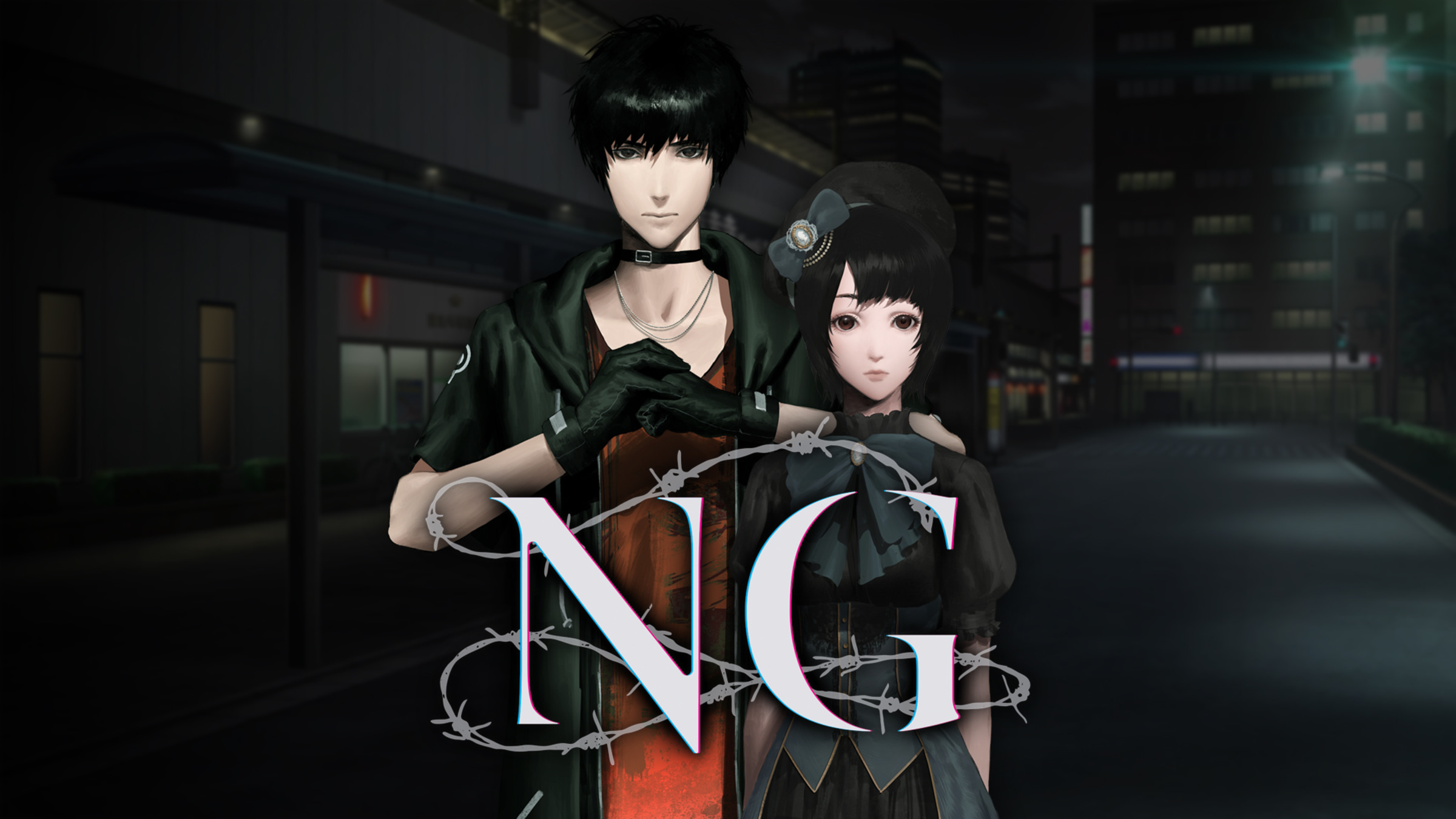
NG features a much smaller main cast of characters than Death Mark, and the game itself is split into two halves: the Kaoru/Seiji half and the Ban/Rosé half (alongside the intro and ending, of course). For the first half, Akira's partners are Seiji, his childhood best friend and the son of a yakuza boss who can be pretty violent and scummy, and Kaoru, an occult fangirl who is also an idol. For the second half, Akira's partners are instead Ban, a middle-aged shady journalist known for taking bribes and having a gambling addiction, and Rosé, a flirty, mysterious magician fascinated by the occult who never reveals much about herself.

Since NG lacks Death Mark's rotating cast of characters, its entire main cast as well as the secondary characters get far more development and, as a result, it's far easier to grow attached to them. For as much as I enjoyed and even praised Death Mark's rotating cast, NG's characters are a lot better. However, much of this could be because the quality of the writing and localization has increased tenfold: the writing now has a lot more personality and feels way less stiff, with a good amount of humor injected during the game's downtime. Their designs also lean far less on tropes than Death Mark's characters, and they feel like real people this time around.
Akira in particular is a great protagonist, especially when compared to Death Mark's Yashiki, who was basically a blank slate (on purpose, but still). He's appropriately gruff, foulmouthed and standoffish since he's a delinquent, but he's also caring in his own way and is generally pretty resourceful on top of being portrayed as freakishly strong. The cast of characters around him are almost all shady in one way or another too, with Seiji being a yakuza boss's son, Ban being a journalist known for taking bribes and blackmailing people, and Rosé suspiciously being good at things like lockpicking and frequently breaking into places. It gives this sort of seedy atmosphere to the game that I don't see that often for this sort of thing.
He also gets a special ability called Bloodmetry that allows him to see someone's last memories when touching their blood. This ability is really cool and there's a button for it while exploring, but there's only one time halfway into the game where I had to take a guess and try using Bloodmetry on something that wasn't explicitly stated to be blood. All the other times, the moment to use Bloodmetry are spelled out for you, which is a bit of a shame. It's a cool idea I wish was expanded upon more.

The story itself is generally better than Death Mark in terms of quality, mainly due to the localization's higher quality, but I simultaneously found it less engaging than Death Mark's due to the different approach to storytelling. The characters are more well-rounded overall and the setting is more well-defined with the stylistic choice to abbreviate city (H City, for example) and character names (S-ko, for example) is practically gone except when needing to be consistent with Death Mark. The more childish way of writing the spirits' dialogue is also gone, and as a result it all feels more believable. There's twists and turns, obviously, but it simultaneously feels a bit more 'safe' in a way. It also isn't quite as scary for multiple reasons, but one of them is the story's higher reliance on Japanese fairytales and folktales, especially Momotarou and Princess Kaguya.
The UI is also less dirty and grimy, instead being more modern in a way that reminded me more of the Persona games, but the addition of nametags and portraits makes everything feel so much easier to follow. The font colors used are also either more distinct or stand out better against this UI than in Death Mark. The text scrolling issue from Death Mark is also completely gone, allowing you to read at the speed you want to, which was massively welcome for me. However, the fast forward and log buttons are still not displayed anywhere, which is a bit strange.
The most noticeable thing when going from Death Mark to NG for me was seeing all the improvements made to the game's formula. Practically everything that felt off or undercooked in Death Mark is fixed or replaced with something else. The localization is better, the UI is better, the font is more readable, the text scroll is fixed, the character writing is better, the character designs are tidied up, and so on. There's a big improvement that comes with a caveat, however, and that's the exploration controls: unlike Death Mark, movement is purely determined by the map, and there no longer is this weird directional control where you can be looking anywhere other than north. The caveat is that exploration has been reduced pretty significantly in NG, to the point that a lot of the areas are either straight lines or three rooms. You can even open the full map this time around, but it's only barely useful in one segment.

Thankfully, there is a game-long sidequest where an unknown person only known as D-Man sends you texts at certain points with a cryptic mission that is always simply making you investigate a specific object in your current environment, and it must be done immediately. Doing this successfully will reward you with a D-Man card that has some additional worldbuilding from D-Man, most of them directly about the events of Death Mark. If you find all of D-Man's cards, there's an extra scene near the end of the game that's pretty neat. This D-Man sidequest is a very welcome, and I almost wish there were more little sidequests like this.

The art is once again fantastic, with character designs again handled by Fumiya Sumio, but this time spirits were done by kera, who does a fantastic job with them and I found them even better than the ones in Death Mark that Rui Tomono did overall. Notably, the characters now have multiple facial expressions instead of just one in Death Mark, which helps a ton with making them feel more like people. The full-screen "horror screens" return, and are simultaneously a lot more intense, but also more tame. The weird focus on nearly naked women victims is gone, thankfully, but a lot of these screens feel a bit tame or underwhelming if they don't involve something gorey or a spirit. It's rarely gorey when it feels like it needs to be, which is strange since there's some incredibly disturbing scenes in here, and others that feel like they don't pack nearly enough of a punch.
A big part of the game's lesser scare factor is the choice of environments. Befitting the shadier cast of characters, all of the game's locations are public areas that require breaking or sneaking into in different ways. These places are mostly active at normal times of day, which is a lot different than Death Mark's abandoned locations that were borderline ruins. So with the transition from large, deserted locations to small areas you're trespassing into, a lot of the time things don't feel particularly tense. It doesn't feel like something's gonna happen when you go to the next screen since there's so few screens in general. It's all cleaner too, and a lot of these locations have pretty neutral ambiance which is disappointing. Later in the game, this thankfully ramps up substantially, culminating in a pretty terrifying section; I just wish the game was more consistently scary with its locations. There's less disconnect between the story and art as well, though I do wish there were more variations of the few screens you go to as the story progresses to reflect things Akira does as sometimes it brings back that odd disconnect that Death Mark occasionally had.

Returning from Death Mark are the Death Choices, now rebranded to Crisis Choices (with Spirit Power now being Security), and they have been simplified a tad by making each Crisis Choice sequence start with Akira at 1000 Security instead of making it a resource you can find while exploring. These are better overall from the Death Choices, since the Crisis Choices have you guessing or caught off-guard by easily missed information far less often (though it still happens). However, most of them still basically give you the answer before making you choose, and there's far less clever ones overall, though there's one standout choice near the end. They feel more integrated into the story, whereas in Death Mark it felt like they were randomly added at times to change things up or catch you off-guard.
Thankfully, the spirit combat sections have been completely reworked into Survival Escape segments, where you instead have to investigate a screen while the spirit is there and figure out what to do to proceed. These are miles better than the combat sections and have less clunky guesswork involved as well, and I had a blast doing them even when I got stuck on them. This time it truly feels like the apex of a crescendo of tension where you have to actively deal with the spirit rather than just dealing with it until it gets close. The game still has good and bad endings for each spirit where you either purify or destroy it respectively, but this time it actually tells you that this is a feature of the game, unlike Death Mark.

The Partner system is back and basically the same, where you get a choice between two partners for a day and then investigate with one of them. This time, the game will flat out tell you when you need a different partner to investigate something, which is welcome but also feels a bit redundant when the areas are all so small. These moments are few and far between too, and make more sense overall, and you don't need specific partners for each spirit anymore either. It's kind of a whatever this time around instead of being a clunky detriment.
Similar is the new Judging feature, where Akira gets a choice of five emotions (very bad, bad, neutral, good, very good) at times when an NPC will ask him a question about how he feels about something. This is kind of a big nothing, resulting in one line of dialogue per emotion and, at some point, giving you pretty goofy NPC profile pages in the style of an RPG if you end up getting along with them enough. It feels superfluous and, even worse, kind of out of character for Akira; if you were to roleplay as him, almost all the answers would be neutral at best. It's a neat idea that feels tacked on in general and doesn't add much to the game.

Once again, the game's music was handled by Naoaki Jinbo who does about as perfect a job as you could ask for this kind of game. There are some reused tracks here, but they're used well and there's enough new music that it doesn't make the game feel cheap. The jingles are all the same as Death Mark and still just as effective. This time around, the voice acting is more present, with characters each having a few lines and most spirits being almost fully voice acted. There's some truly disturbing moments with some NPCs that have excellent voice acting as well that makes it all feel a lot more tangible.
PROS AND CONS
PROS
• Great story with some cool twists.
• Excellent cast of characters with more grounded designs than Death Mark. No real weak links.
• Practically perfect soundtrack and sound effects again, with better, more frequent voice acting than Death Mark.
• Much better localization overall, which makes the game feel much higher quality and adds tangible personality to the character writing.
• Fantastic art with very disturbing spirits especially.
• Fun game-long sidequest.
• Survival Escape is a really fun way to replace spirit combat.
• In general a big improvement over Death Mark.
CONS
• Tiny areas with little exploration.
• Bloodmetry is barely used in interesting ways.
• Environments for more than half the game don't feel that scary overall, especially since there's barely any ambient noises in them.
• Redundant Partner system.
• Notes aren't used very much.
• Some stability issues on Switch (had two crashes as well as a handful of times where the screen never transitioned properly, necessitating a reset).
WORTH PLAYING?
Absolutely. NG is a really strong game whether played as a sequel or as a standalone game, though I think the former is a better way to play it overall, especially if you're gonna do the D-Man sidequest. It's a marked improvement over Death Mark in almost every way, and is more than worthy of a playthrough, especially in October. It is more of a visual novel than an adventure game compared to Death Mark, though, so I think fans of adventure games might be a bit disappointed. I don't know if the stability issues I encountered on Switch are common or on every platform, but it's still good to know. I thoroughly enjoyed my time with it!
Comments
Post a Comment